どちらも16タイプ、違いは「2人の間」に起きること
MBTI や 16Personalities しか知らない人に、ソシオニクスを数文で説明するとしたら、どう言いますか。
If you had to explain socionics in a few sentences to someone who knows only MBTI or 16Personalities, what would you say?
まず共通点から話すと思います。わたし自身も同じ道から入ったからです。わたしの類型論への入口は MBTI の本『The Art of SpeedReading People』で、その後間もなく偶然ソシオニクスに行き当たりました。どちらもユングから来ていて、どちらも16の型を与えるので、外から見ると似ています。
違いは、型が何のためにあるかです。MBTI や 16Personalities は、あなたを記述します。ソシオニクスは、あなたが情報をどう取り込み、どう扱うかを記述し、それを使って、あなたとほかの各型との間に起きることを記述します。組み合わせにはすべて名前のついた関係があり、最も補い合う双対関係から、最も消耗する衝突関係まであります。ですから、皆さんの知っているテストが「わたしは誰か」で止まるところで、ソシオニクスは「なぜこの人とは楽で、あの人とは骨が折れるのか」へと進みます。この2つ目の問いこそ、わたしが20年近くソシオニクスに付き合ってきた理由です。
I would start with what they share, because I came in the same way. My introduction to typology was an MBTI book, "The Art of SpeedReading People", and I stumbled upon socionics shortly afterwards. Both come from Jung and both give you sixteen types, so from the outside they look alike.
The difference is what the type is for. MBTI and 16Personalities describe you. Socionics describes how you take in and handle information, and then uses that to describe what happens between you and each of the other types. Every pairing has a named relation, from duality, the most complementary, to conflict, the most draining. So where the tests you know stop at "who am I?", socionics carries on to "why is it easy with this person and hard work with that one?" That second question is the reason I have stayed with it for nearly twenty years.
英語の原文を見る
If you had to explain socionics in a few sentences to someone who knows only MBTI or 16Personalities, what would you say?
I would start with what they share, because I came in the same way. My introduction to typology was an MBTI book, "The Art of SpeedReading People", and I stumbled upon socionics shortly afterwards. Both come from Jung and both give you sixteen types, so from the outside they look alike.
The difference is what the type is for. MBTI and 16Personalities describe you. Socionics describes how you take in and handle information, and then uses that to describe what happens between you and each of the other types. Every pairing has a named relation, from duality, the most complementary, to conflict, the most draining. So where the tests you know stop at "who am I?", socionics carries on to "why is it easy with this person and hard work with that one?" That second question is the reason I have stayed with it for nearly twenty years.
なりたい自分で型を選ばない
自分の型を判定しようとする人が、いちばんよくする間違いは何ですか。
What is the most common mistake people make when they try to determine their own type?
なりたい自分の型を選んでしまうことです。16の記述を読み、自分をよく見せてくれるものを選び、それを守ろうとする。わたし自身もそうでした。物静かで論理的な、体系を考える人という LII の記述が自分のイメージに合っていたので、10年以上、自分を LII だと言っていました。何年も前に、経験のある判定者から ILE だと言われたこともあったのですが、わたしはその判定を手放し、また自分を LII と呼ぶようになりました。最後に決め手になったのは、別の記述ではありませんでした。型に確信のある家族や友人との関係を見て、わたしが ILE でなければその関係は説明がつかない、と分かったことです。
ですから助言は、まず機能から考えることです。何が楽にできるか、何を大事にしているか、どこが弱く、自分でもそれを分かっているか。そのうえで、その答えを、いちばんよく知っている人たちとの関係で確かめてください。
Typing the person they would like to be. People read sixteen descriptions, pick the one that flatters them, and then defend it. I did this myself. I called myself an LII for more than a decade because the description of a quiet, logical systems thinker suited my picture of myself. An experienced typist had told me years earlier that I was an ILE and I did not hold on to it. What settled it in the end was not another description. It was looking at my relations with family and friends whose types I was sure of, and seeing that they only made sense if I was an ILE.
So my advice is to work from the functions first: what comes easily, what you care about, and where you are weak and know it. Then test the answer against the people you know best.
英語の原文を見る
What is the most common mistake people make when they try to determine their own type?
Typing the person they would like to be. People read sixteen descriptions, pick the one that flatters them, and then defend it. I did this myself. I called myself an LII for more than a decade because the description of a quiet, logical systems thinker suited my picture of myself. An experienced typist had told me years earlier that I was an ILE and I did not hold on to it. What settled it in the end was not another description. It was looking at my relations with family and friends whose types I was sure of, and seeing that they only made sense if I was an ILE.
So my advice is to work from the functions first: what comes easily, what you care about, and where you are weak and know it. Then test the answer against the people you know best.
SLIDE System と、誤解されやすい4文字コード
ご自身の仕事のなかで、最も重要だと考える考えは何ですか。また、最も誤解されやすいのはどれですか。
Which idea in your own work do you consider the most important, and which is most often misunderstood?
最も重要なのは SLIDE System(Stern-Lezama Interpersonal Dynamics Evaluator、スターン=レザマ対人ダイナミクス評価法)で、2000年代半ばにわたしが行った研究から生まれました。ソシオニクスの構造は変えません。モデルA、16の型、タイプ間関係はすべてそのままです。変えるのは語彙です。8つの機能を SLIDE では「アティチュード(態度)」と呼び、外からどう見えるかで名づけます。モデルAの8つの位置も、図のどこにあるかではなく、実際に何をするかで名づけます。ソ連時代の心理学の素養がない読者でも、すぐに理論を使えるようにするのがねらいです。
最も誤解されているのは4文字コードです。わたしが ILE(ENTp)と書くのは、読者がその文字を知ってやって来るからですが、多くの人はそれを、MBTI の結果がそのままソシオニクスの型に変換できるという意味に受け取ります。そうではありません。2つの体系は機能の定義が違うので、同じ人がそれぞれで違う文字になることがあります。このコードはソシオニクスの型を指すラベルであって、テスト結果の翻訳ではありません。
The most important is the SLIDE System (Stern-Lezama Interpersonal Dynamics Evaluator), which grew out of research I did in the mid-2000s. It does not change the structure of socionics: Model A, the sixteen types and the intertype relations all stay as they are. What it changes is the vocabulary. The eight functions, which SLIDE calls attitudes, are named for what each looks like from the outside, and the eight positions of Model A are named for what each does in practice and not for where it sits in a diagram. The aim is that a reader with no background in Soviet-era psychology can use the theory straight away.
The most misunderstood is the four-letter code. I write ILE (ENTp) because readers arrive knowing those letters, and many take that to mean their MBTI result converts directly into a socionics type. It does not. The two systems define the functions differently, so the same person can come out with different letters in each. The code is a label for the socionics type, not a translation of a test result.
英語の原文を見る
Which idea in your own work do you consider the most important, and which is most often misunderstood?
The most important is the SLIDE System (Stern-Lezama Interpersonal Dynamics Evaluator), which grew out of research I did in the mid-2000s. It does not change the structure of socionics: Model A, the sixteen types and the intertype relations all stay as they are. What it changes is the vocabulary. The eight functions, which SLIDE calls attitudes, are named for what each looks like from the outside, and the eight positions of Model A are named for what each does in practice and not for where it sits in a diagram. The aim is that a reader with no background in Soviet-era psychology can use the theory straight away.
The most misunderstood is the four-letter code. I write ILE (ENTp) because readers arrive knowing those letters, and many take that to mean their MBTI result converts directly into a socionics type. It does not. The two systems define the functions differently, so the same person can come out with different letters in each. The code is a label for the socionics type, not a translation of a test result.
関係の記述は、予測ではなく地図
タイプ間の関係(相性)の記述を、読者はどう扱うべきですか。予測でしょうか、地図でしょうか、それとも別の何かでしょうか。
How should a reader treat descriptions of intertype relations: as a prediction, as a map, or as something else?
地図として、です。関係の記述は、2つの型の間の地形を教えてくれます。どこで理解が苦労なく生まれやすいか、どこでお互いを読み違えやすいか、それぞれが相手に欠けているもののうち何を差し出せるか。けれども、ある特定の友情や結婚がどうなるかは教えてくれません。それを決めるのは、成熟度、共有する価値観、そしてごく普通の暮らしの事情です。わたしは、難しい関係が、自分たちが何に向き合っているかを理解している人たちの間でうまくいっているのを見てきました。
地図にはもう1つ使い道があります。よく知っている人がいて、2人の関係の記述がまったく当てはまらないなら、2つの型のどちらかがおそらく間違っています。わたしが自分の型を正したのも、この方法でした。
関係の記述が決してなってはならないのは、誰かを見限る理由です。
As a map. A relation description tells you about the terrain between two types: where understanding tends to come without effort, where each is likely to misread the other, and what each can offer that the other lacks. It does not tell you how a particular friendship or marriage will turn out. Maturity, shared values and plain circumstance decide that, and I have seen difficult relations work well between people who understood what they were dealing with.
The map has a second use. If you know someone well and the description of your relation does not fit at all, one of the two types is probably wrong. That is how I corrected my own.
What a relation description should never be is a reason to write someone off.
英語の原文を見る
How should a reader treat descriptions of intertype relations: as a prediction, as a map, or as something else?
As a map. A relation description tells you about the terrain between two types: where understanding tends to come without effort, where each is likely to misread the other, and what each can offer that the other lacks. It does not tell you how a particular friendship or marriage will turn out. Maturity, shared values and plain circumstance decide that, and I have seen difficult relations work well between people who understood what they were dealing with.
The map has a second use. If you know someone well and the description of your relation does not fit at all, one of the two types is probably wrong. That is how I corrected my own.
What a relation description should never be is a reason to write someone off.
最初に読む1冊
初めての人に最初に読んでほしい文章を1つ挙げてください(ご自身のものでも、他の著者のものでも)。
Which single text would you ask a newcomer to read first (your own or another author's)?
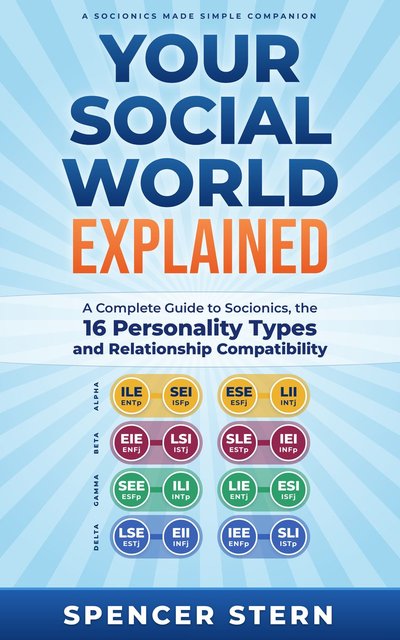
自分の本『Your Social World Explained』です。まさにこういう読者のために書きました。テストを通じて16の型に出会い、ソシオニクスが何を付け加えるのかを知りたい人です。型、型どうしの関係、モデルAを、平易な言葉と図で扱い、予備知識を前提にしていません。第2版は2026年に出ました。英語の本で、まず試したい人のために yoursocialworldexplained.com/sample/ に無料の試し読みがあります。
基本が身についたら、原典の著者たちを読む価値があります。このサイトのようなサイトが、それを日本語で可能にしてくれます。
My own, "Your Social World Explained". I wrote it for exactly this reader: someone who has met the sixteen types through a test and wants to know what socionics adds. It covers the types, the relations between them and Model A in plain language, with diagrams, and it assumes no background. The second edition came out in 2026. It is in English, and there is a free sample at yoursocialworldexplained.com/sample/ for anyone who wants to try it first.
Once the basics are in place, the original authors are worth reading, and sites like this one make that possible in Japanese.
英語の原文を見る
Which single text would you ask a newcomer to read first (your own or another author's)?
My own, "Your Social World Explained". I wrote it for exactly this reader: someone who has met the sixteen types through a test and wants to know what socionics adds. It covers the types, the relations between them and Model A in plain language, with diagrams, and it assumes no background. The second edition came out in 2026. It is in English, and there is a free sample at yoursocialworldexplained.com/sample/ for anyone who wants to try it first.
Once the basics are in place, the original authors are worth reading, and sites like this one make that possible in Japanese.
16Personalities で型を知った若い世代へ
日本ではここ数年、16Personalities をきっかけに若い世代で類型論が広まり、自己紹介に型を書く人も多くなりました。この読者たちに伝えたいことはありますか。
In Japan, typology has spread among young people in the last few years through 16Personalities, and many now put their type in their self-introductions. Is there anything you would like these readers to know?
3つあります。
まず、結果は出発点として扱ってください。質問紙が伝えられるのは、答えたその日に、自分をどう見ているかだけです。真剣に学ぶ人の多くは、少なくとも一度は自分の型についての考えを改めます。わたしは10年以上かかりました。
次に、ソシオニクスには型と、型どうしの関係という2つの半分があり、型はそのうち面白みの少ないほうです。自己紹介の4文字は、あなたについて何かを人に伝えます。ソシオニクスが扱うのは2人の間に起きることで、家族と、職場で、パートナーと、ふだんの暮らしの中で役に立つのはそこです。
最後に、人を理解するために使い、人を振り分けるためには使わないでください。ほかより優れた型はなく、禁じられた関係もありません。誰かの型を知って、その人にもっと辛抱強くなれるなら、上手に使えています。その人を避ける理由になるなら、そうではありません。
Three things.
First, treat your result as a starting point. A questionnaire can only report how you see yourself on the day you answer it. Most people who study this seriously change their mind about their type at least once. I took more than ten years.
Second, the type is the less interesting half. Four letters in a self-introduction tell people something about you. Socionics is about what happens between two people, and that is where it becomes useful in ordinary life: with family, at work, with a partner.
Third, use it to understand people, not to sort them. No type is better than another and no relation is forbidden. If knowing someone's type makes you more patient with them, you are using it well. If it gives you a reason to avoid them, you are not.
英語の原文を見る
In Japan, typology has spread among young people in the last few years through 16Personalities, and many now put their type in their self-introductions. Is there anything you would like these readers to know?
Three things.
First, treat your result as a starting point. A questionnaire can only report how you see yourself on the day you answer it. Most people who study this seriously change their mind about their type at least once. I took more than ten years.
Second, the type is the less interesting half. Four letters in a self-introduction tell people something about you. Socionics is about what happens between two people, and that is where it becomes useful in ordinary life: with family, at work, with a partner.
Third, use it to understand people, not to sort them. No type is better than another and no relation is forbidden. If knowing someone's type makes you more patient with them, you are using it well. If it gives you a reason to avoid them, you are not.